La Placita Olvera Public Art-Linah Robles
La Placita Olvera
April 1st, 2026
The oldest plaza of Los Angeles is downtown, a pedestrian-only Mexican marketplace near the Union Station. Various art pieces are buried within the plaza, where they speak to their culture. There are a multitude of public art pieces throughout the plaza; they may take the form of statues, fountains, murals, or monuments. The local plaza is full of small businesses and food vendors. Across the street, there is a cathedral, where families gather and enjoy mass, baptisms, communions, and weddings. In the plaza itself, there is a small museum. This museum represents Latinx work and hosts occasional community events. La Placita Olvera offers a lot of community services for the locals nearby.
Field Work:
 |
"El Burro" Welcomes all visitors to the plaza as they stroll through the main entrance. He has been a tradition for decades, representing culture and family. This engaging donkey lets children take adorable photos and enjoy soft petting. El Burro stands tall, guarding his merchant's products! |
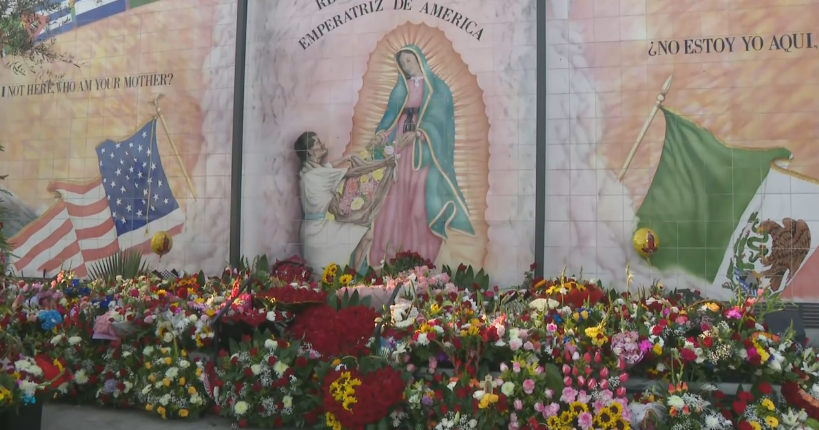 |
The cathedral, Our Lady of the Angels, in the Placita Olvera, has murals on the outside. These murals are rich in culture; they show images of the Virgin Mary, the American flag, and the Mexican flag. This cathedral means a lot to my family; this is where my brother and I were baptized. The services provided allow for families and loved ones to celebrate blessings in a cultural environment. The day that is celebrated the most is December 12, as it is a Catholic tradition; this day celebrates the Virgin Mary--filling the cathedral with flowers and family members. |
 |
The Avila Adobe was built in 1818. It was one of the first houses built in Downtown Los Angeles. This small house is on Olvera Street and still stands. Anyone is welcome to visit the house and view the old-timey furniture that lives inside. Critical Analysis: The Placita Olvera is a sanctuary for culture and history. The representations through the street roar, in the food, music, and art. The Latinx voices are well heard, as they are being represented; other people have the same opportunity to enjoy Olvera Street as well. The funding comes from sponsorships and donations. The Olvera Street Merchants Association Foundation, OSMAF, is a non-profit organization composed of merchants and family members on Olvera Street. Many of these folk have been here since the start in 1930. The city of Los Angeles protects Olvera Street as well; they assist in upkeep for various buildings in Los Angeles. Proposal: Growing up, I would go on school field trips to visit Olvera Street. I would propose that they continue to welcome students of all ages to the plaza. Having young kids be connected with the city is very important, as they can soon recognize the historical facts of their community. I would also recommend that the association advertise more of Olvera Street. Having visitors would keep small businesses busy, fueling families. Olvera Street has murals that, over time, fade in color; if they are able to fix this, that would be very meaningful. Bringing back the natural colors of art can be difficult, but not impossible. Financial Reflection: |
My initial understanding of civic engagement at first was similar to public engagement. I never thought deeply when it came to civic engagement. The main idea of civic engagement is for expression, a communication through art or a movement in a community. I first picked Olvera Street because of my connection to the place as a child, growing up, my family and I would always visit the plaza; therefore, I am familiar with the area. The most surprising thing is that all the museums are free for the public, compared to other places where tickets may be overpriced. All the community members are very kind and helpful, especially guiding visitors on where to park. If I were to redo this assignment, I would like to focus on a different community, perhaps a growing community, closer to the Inland Empire. I love art, music, and traditions. I really enjoyed this assignment due to the fact that it took me back to my childhood and overall grounded me all over again. Art is not just about pretty colors; every mural and statue speaks up for something or someone.


Comments
Post a Comment